Shut Out The Sun

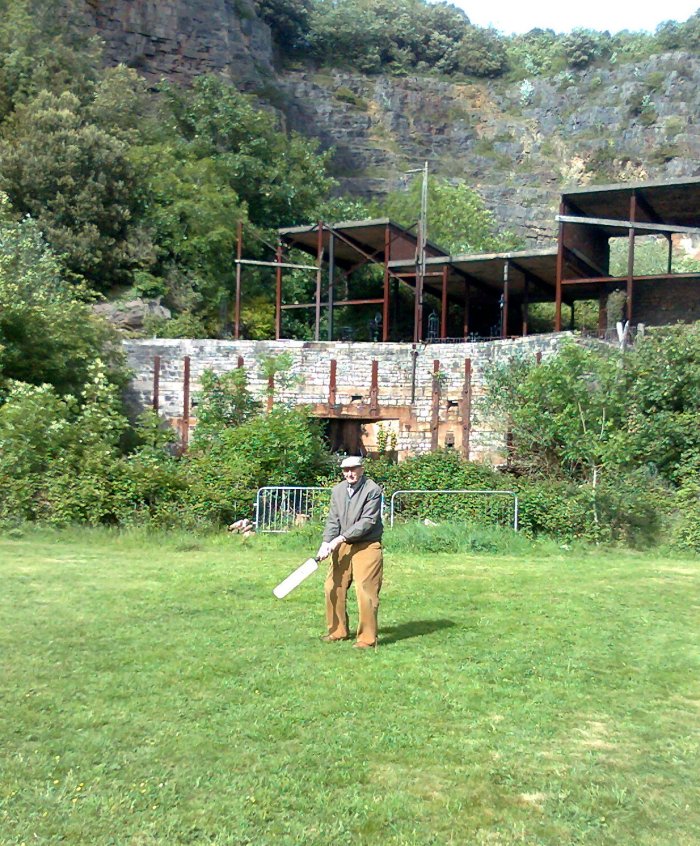
Cricket at the quarry

It was my dad who first took me to the cricket. A festival game in Weston-super-Mare, 1964. Dad holiday smart in his double-breasted blazer and open-neck shirt. Somerset those days were the team of Langford, Alley and Fred Rumsey. I left Somerset long before they ever won anything, long before the era of Richards and Botham (“Jus’ an o’d yokel” Dad called him). And after that time I don’t think we went together again or talked much about it, or played, other than on the beach (or quarry). Like other things, birding, say, he took me to the threshold and left me there.

The last Sunday in June, 2019 and a call from my brother told me Dad had had a fall. With my wife and daughter I took the train across the south of England. Shoreham by Sea, Lancing, Worthing, Angmering, Chichester: an incantation along the crowded south coast; inland, Salisbury, where, at other times, I’d jump off to see the cathedral, Warminster and its uncanny hill, Bradford on Avon and thoughts of its Saxon church, and onward. At Weston General Hospital he seemed as he had 18 months before following another fall: bones protruding, dun skin bruised and blotched, stony, but still vital. He died later that night.

Then the cricket came back. Here in Hove a few days watching Sussex at the County Ground; Test highlights on iPlayer in the evening and Day Passes to Sky TV: work was patchy and I needed to shut out the sun.

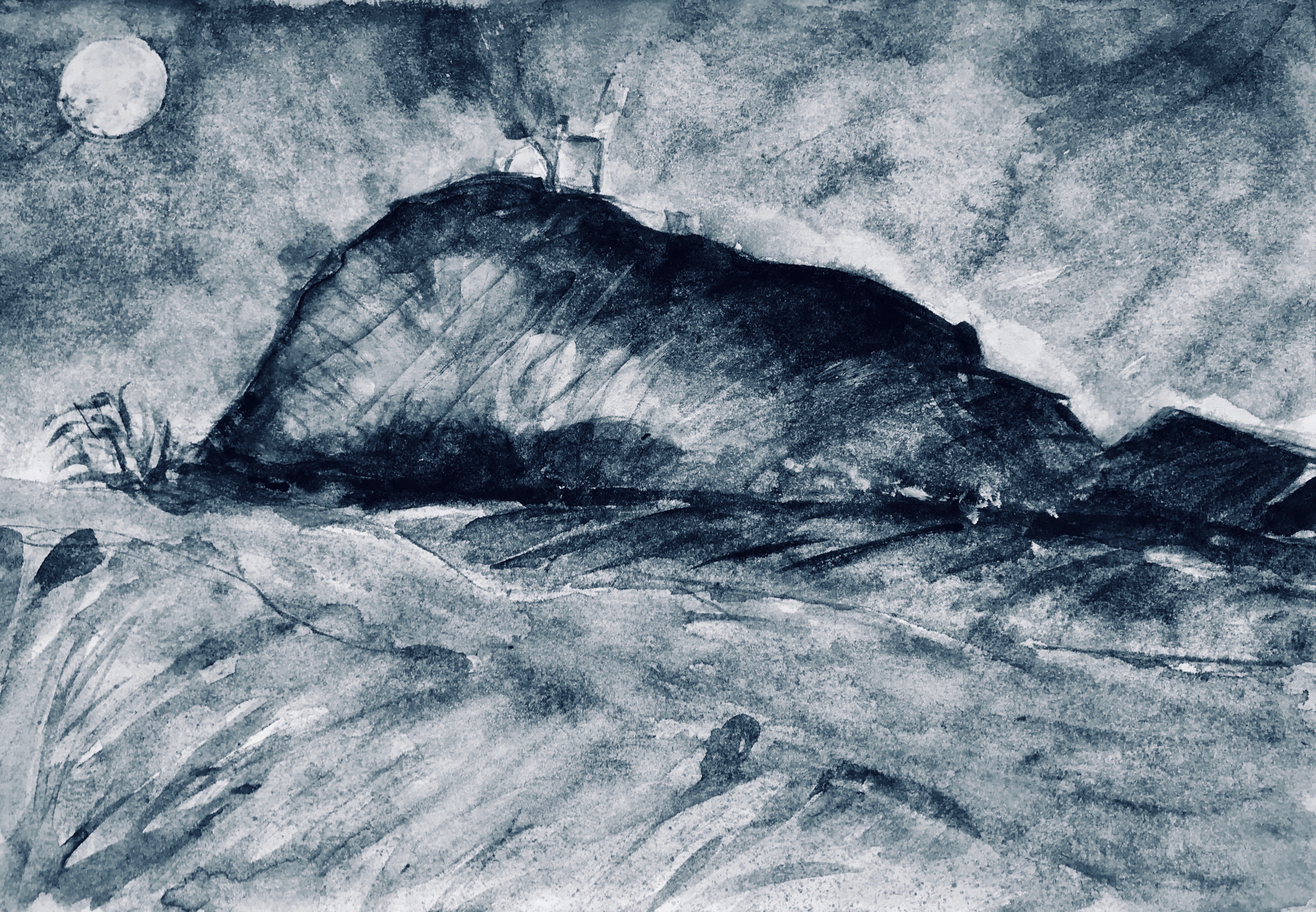
Sunday 25th August. I took the train to Lewes, then walked out of the town, onto the Downs at Southerham, up to Mount Caburn, then down into Glynde. Walking: something else my dad had left me. I knew there was a game on that day: the local club, Glynde & Beddingham were playing an MCC XI. The tenth anniversary of their winning the National Village Cup; I’d read a long article about it while working in Istanbul, fearing I was reading about the death of an England I hardly knew.

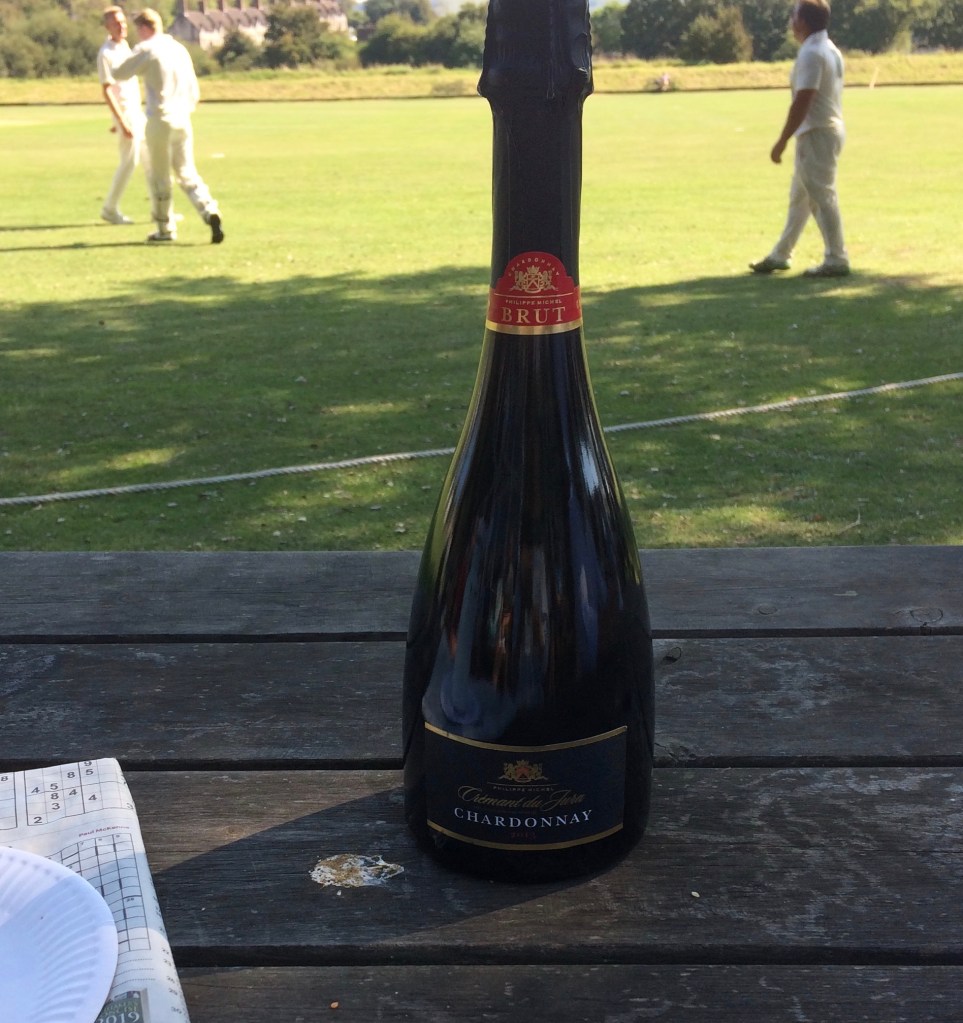
Outsider. Incomer. I did what I’ve always done: tried to fit in without standing out. Drank the local beer, sat just off from the clubhouse, chatted when I could with the members. I won a bottle of fizzy Chardonnay, the one that comes in a seductive bottle. Not quite won. I was first in line for the raffle but the Aussie in charge hadn’t worked out how to do it, so I went back to my seat empty handed. When I came back again all the tickets had been sold. Apologetically the Aussie handed me the only thing left, the wine.

By now his English mates were huddled over their iPhones in the lee of the clubhouse. Joffra Archer had joined Ben Stokes. He couldn’t could he, steal it for us in Sussex? That reverie didn’t last. Then came Jack Leach of Somerset, the last man. I stopped chipping in with the banter. I could see my dad’s dark lonely bungalow, smell its must and aged damp in the Weston-super-Mare he’d never left. “C’mon, c’mon” he was saying to the radio, stooped, clothes stained, unkempt, more impatient to get his tea on time than for any win. Opening tinned spaghetti, bundling it into the microwave, slamming the door shut “Fiddle-arsing about”, he’d call it.

Then a roar from the lads round the phones and I was back in the Sussex sunshine.
One for later

The was entered for the Wisden Cricketers’ Almanack writing competition for 2021. The Co-Editor in his acknowledgement warned me that “Probably because of the coronavirus pandemic, we have received significantly more submissions than ever before.” And added he would be in touch with the winner before the end of January 2021. As I never heard from him again I can assume I’m one of the also-rans. Well, it’s the taking part that counts.

This month my father would have been 94.
Maradona in Harlesden

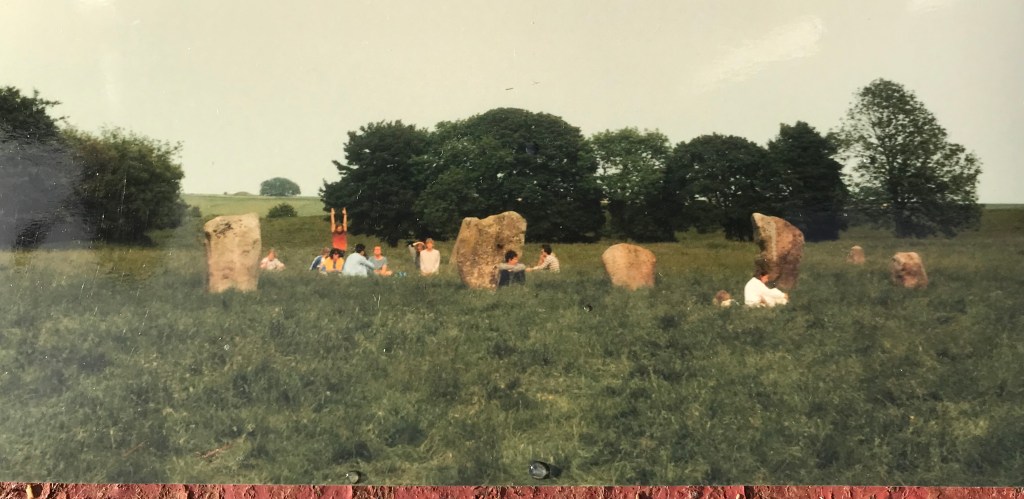
Midsummer 1986 I went on a weekend retreat at Avebury.

A bunch of us, nine or ten, met that Friday afternoon near Notting Hill station, outside the studio of the man who was to lead it, a reiki practitioner. I’d found out about it through an ad in Time Out. We were to do a sun worship ritual and dowse for earth energy. We got in a mini-bus, the usual procedure, and a few hours later disembarked at a communal farmhouse in Wiltshire. Late that night, with the sun hardly set, the Reiki Man led us through a meditation.

Why, I don’t know, but I must have said I thought I could do better. He said, alright, you lead the meditations and handed them over to me. I’d been meditating for all of half a year at a Buddhist centre just off the Portobello Road: this was my first retreat.

On the Sunday afternoon we were dropped off back in London. On the way we’d stopped to look at at Silbury Hill. There was warm, blue sky, the same blue as over the stones at Avebury, but here in Harlesden the air was steeped with dust mites, sun-flecked above the tired Victorian streets. Coming out of Willesden Junction by myself I saw a board outside a pub advertising the football, the World Cup was on: England v Argentina. I remember thinking ‘Why not?’.

The pub was one of those — back then there were hardly any others — that sucked the light out of the street, sucked it into the matted carpets, the moulded plaster walls and the high ceiling. When my eyes adjusted I was in a large, smoke-filled room of maroons and ochres. It was crowded, but most of the men paid little heed to the screen, a kind of projection sheet hung at one end. The shadowy images and the muffled commentary were hardly advanced on the moon landing. I found a stool at the bar and took a Guinness. I was 30 years old, had short salt-and-pepper hair and wore my summer jacket of pale blue linen.

Then they scored. Everyone cheered. The men stopped playing pool, held their cues aloft, laughter and cheers all round. Black, Asian and Irish. I couldn’t say the cheers were malicious: ironic, mischievous, comradely: a common enemy had got his comeuppance, that’s all. On the screen some blanched out England players were hovering round the referee. ‘That won’t do any good’ I thought, not knowing what they were complaining about.

The game ended. On the screen Terry Venables said something about if Shilton had a weakness it was dealing with crosses. They showed Maradona’s mazy run again. Amongst the crowd of men who were beginning to disperse a woman circulated; almost middle-aged, she was dressed in a light summer coat and holding a rattling collection box: ’Have you anything for the Bhoys?’ She was asking, ‘For the Bhoys?’.

As she drew up to me she said ‘You wouldn’t be an Irishman yourself would you, sir?’ The sun had dropped and its light caught her face. I shook my head and we both smiled slightly. Days later I heard of the Hand of God.

Life Is Good

Don’t start in the carpark (again).

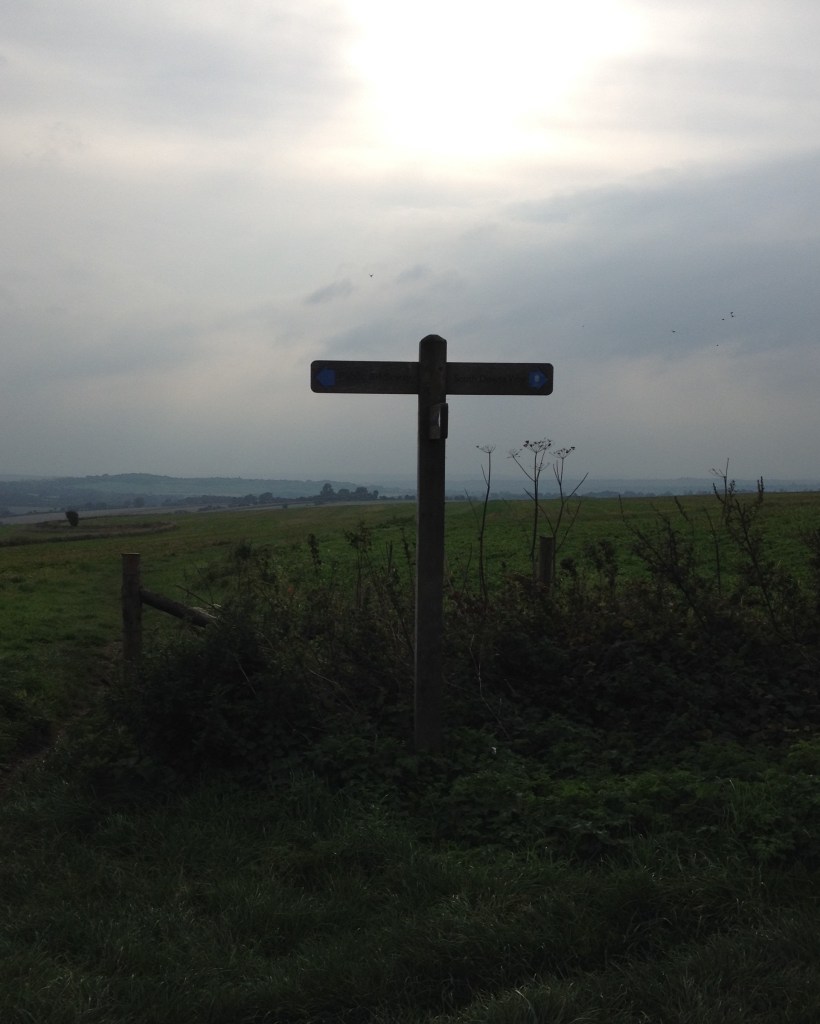
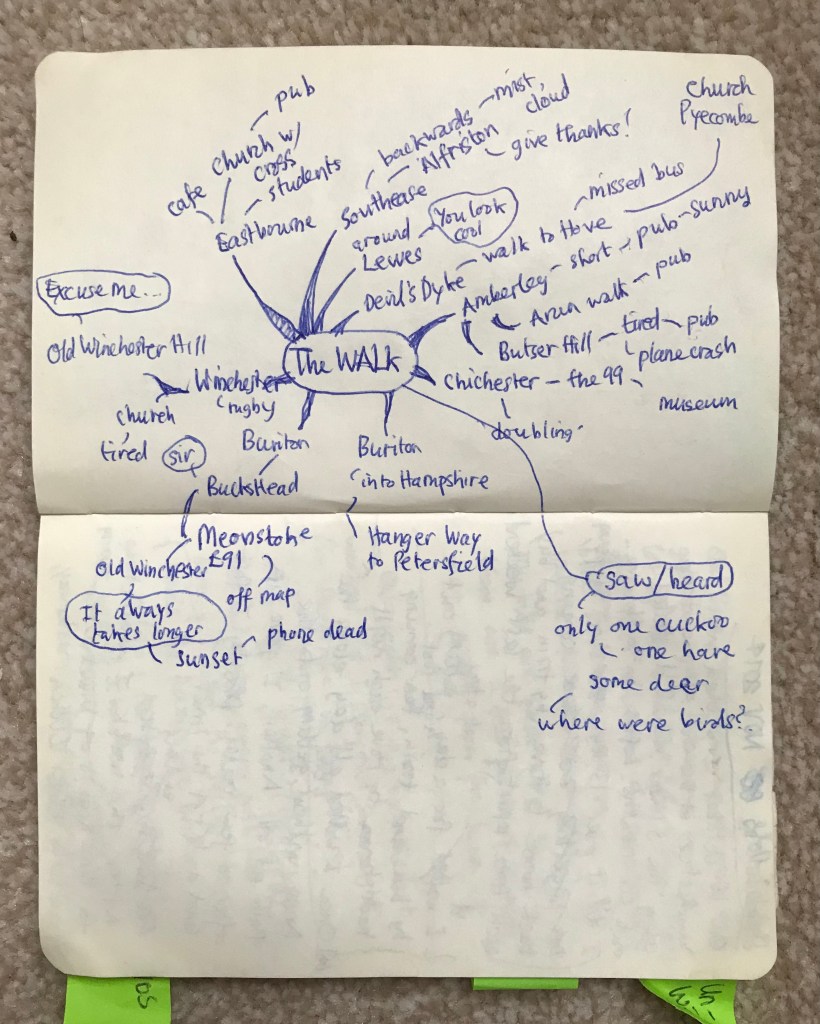
On 10 October 2015 in the late afternoon, I tramped along the footbridge over the A272 and into Winchester at the end of my walk along the South Downs Way. A walk that I’d done over six months and in thirteen stages. I’d walk for up to a day at a time, setting off and getting back home on foot or by bus or train; only on the last two days did I stay away overnight. I felt tired most of the time.

Life Is Good: I cross Meon Springs to Whitepool Farm. There’s a pond; it gulls you at first, then I see it’s set and ready for fishing. Fat trout, most likely. It’s good business round here; fat fees, too. I keep on walking; good, no-one bothers me.

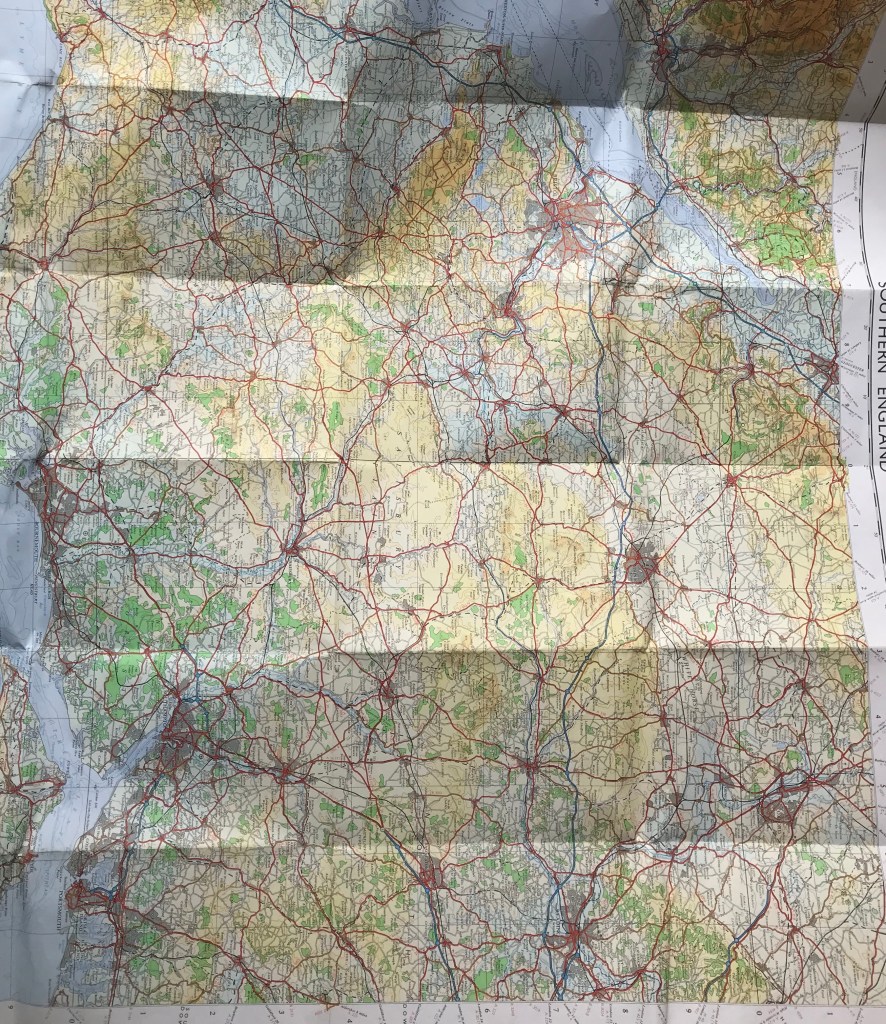
I check the map, then up, keeping the copse to the right, it’s steeper now. Behind is Salt Hill, Butser Hill and, further off, the brief blessing at St Mary’s Buriton with its crossed bones and sarcophagus. No cyclists, no riders, no-one; the dusk or my own will is warding them off.

Then through a gate and onto the road. A car, a Volvo passes. Ahead, south west, the sun is dipping. And against the silver sky, the first sight of the Hill. Old Winchester Hill. Worked earth, grown soft into the land, as still and impassive as a god, taking worship. (But here’s a thing: battery’s dead, memory’s full).

Along the road and I see that the Volvo has stopped, about sixty yards off, and the man’s got out. Around 40, I guess, professional. Hair trim, he’s in smart slacks, a polo shirt with a tiny logo. There’s just me and him on the ridge road. The still sea of my mood changes. He turns to look at The Hill, takes out his phone, — his is charged — and, like a tourist with a relic, captures its likeness. Then strolls slowly on, content, nearing.

As we cross, I say something; I didn’t mean to, it’s from some hidden self I didn’t know, more confession than greeting: ‘Hi’ or ‘Evening.’

The man hears, absolves, smiles slightly: ‘It always takes me longer when I come this way.’

I walk on, calm now, towards the goal, yet feeling a sting like shame.

The next morning, the last morning, at the foot of Old Winchester hill, I see a gaggle of youngsters following me up the path. I hurried on. I didn’t want company. But even as I stumbled on I heard running and one of the lads calling after me, ‘Scuse me, scuse me!’ He was holding on to a map. ‘Scuse me, sir, do I know where we are?’

Back home, for three nights running I dream of Winchester and its stream, the Itchen.

© This is a rewrite of an earlier blog submitted to the Creative Future Writers’ Award 2016 run by New Writing South; it was long-listed.

A Day In Southern England

The day started with me sitting on the lid of the cat’s litter tray after I’d taken it off to clean the base out. It cracked down the middle with a splintering noise. I don’t know why I did it, maybe it just seemed like the kind of thing that wouldn’t happen, defying the logic of my weight, the angle of meeting and the flimsiness of the plastic.

Outside the pet shop, with my new litter tray, in the huge carpark that had once been the home of Brighton and Hove Albion, I got a call from my youngest brother saying that Dad had had a fall the day before. The hospital had put in place end-of-life-procedure. I’d had to call him back, the connection was bad or it might just have been my clumsiness.

One thing after another. It was a warm and sunny day, the last day of June. Now I’d have to take the train across the country. That train ride was something I looked forward to, usually, but on a Sunday, in England?

I told my wife. She started to make preparations to come too, with our daughter. Another thing. Usually I go by myself. Look out the window, read, take a beer. But in truth it was rather lovely. The three of us, a kind of rural ride by train across the south of England on a green and sunny Sunday afternoon. Shoreham by Sea, Lancing, Worthing, Angmering, Chichester, an incantation along the crowded south coast; inland, Salisbury, where I’d jumped off a few weeks before on my last home visit, to see the cathedral, Warminster and its uncanny hill, Dilton Marsh, Bradford on Avon and memories of its Saxon church, Bath. England were playing India away off in Birmingham. The girls mocked me as I checked the score, so far so good, on the mustard coloured BBC app.

We were met at the station by my brother. When we got to the hospital Dad seemed as he had 18 months earlier after another fall: stony but visceral: bones, veins, paper skin with bruises and blotches. He roused himself and straightaway recognised my wife and daughter, ‘Ah! It’s you!’ He hadn’t seen them for two years. Then me: ‘Which one are you?’ I was the last to leave, ushered away by one of the nurses; I hadn’t thought of much to say.

At my brother’s we watched the cricket highlights together, sharing a beer. My daughter explored the garden. It’s got four or five ponds and she went off looking for frogs. We watched the coverage of Glastonbury (which flags, we wondered, might be unacceptable to wave there). I was deeply asleep and had no idea where I was or the time or what was happening when my brother came into my room. He’d got a call from the hospital. It was just after midnight and the two of us walked there through a sleeping village in Somerset.

The hospital appeared like an eerily lit alien presence, we were let in via a video intercom and were led by a nurse into a visitors’ room and offered tea. You’ve got to have tea, I thought, though I didn’t fancy one. There’d been a moment’s hesitation when we’d got to the ward as one nurse whispered to the duty nurse; in the dim light I could see a screen up round my dad’s bed. A little later a doctor came to see us: a young woman, blue uniformed, blonde, calm and good-looking to tell us he had passed away ten minutes before. She asked if there was anything we wanted to know and scanned our faces for any emotion. There was nothing to ask. We thanked her.

A while later another nurse came to see us, sombre but bouncy, somehow. The three of them had held his hand and stroked his hair, she said. We saw the body, still on the bed, in the ward, with the bleeping of monitoring machines and another patient’s rasping breathing going on. ‘I always talk to them’ the nurse said, ‘listening is the last thing to go.’

My dad died on 1st July, 2019, a little after midnight.

Bitter Shrovetide

They don’t look you in the mouth, as such.

Eye-to-eye. Tall enough, broad enough, drunk enough, but no more. He calls you Joseph; today you can call him Thomas. You thee him; he says you, for form’s sake.

‘How’s thy missus?’ A smirk from your pals.

A figgy smile back: ‘You’re looking older, Joseph.’

You’d say that’s France, but you can’t; it’s too bitter and you’d rather forget: ‘And thee still in the bloom of youth, Thomas.’

Eye-to-eye over the brim of the mug. Another smirk.

‘I’ll need some men come harvest time.’

‘Thou’ll need someone afore that.’

So you stand, foot-to-foot, a chill breeze at your back. Then it’s settled: ‘Alright. Come and see me at Easter.’

But the bitter day is coming when he’ll pass you over, like the others. Then, for charity, give you a broom to sweep. But for now, sweetened, the year turns again.

St Nicholas’ Day

‘Son, Son’, he calls.

So I went.

‘I’m on the toilet.’

‘I see’, I say.

He never really got that this was our Christmas. The first weekend in December — it’s a public holiday in Spain. The Feast of St Nicholas, too.  So they come over, my brother and his wife. It’s good for us, as well; cheaper and if we all come we can stay in the Premier Inn. But he always asks, ‘Will you be coming back for Christmas?’

The door is open.

‘I’m going to be a while’, he says.

I say nothing and wait, eyes down.

‘It must have been that soup.’

We try to make a thing of it: we give him presents, he hands out cash — euros for the Spanish — and cards especially chosen: ‘To My Son And His Partner’ for me. He’s precise. One year, after his fall, I had to get them for him, from Card Factory in the High Street; when he came to sign mine he flew into a rage: how was I to know that under the flowery ‘To My Son And His Partner’ was a silhouetted drawing of two men holding hands?

‘I see’,  I say.

‘There’s more to come, I can feel it.’

‘I see’, I said, and moved away.

‘Son, Son!’

*   *   *

St Nicholas IMG_0169

From the ruin of the old church, up on the bare hill, the church dedicated to St Nicholas, you’re hidden from the hospital where he died.  At twilight you could be floating, the land and the sea hardly drawn apart; to the west, the sea falling towards the horizon; the sodden land to the south barely out of the water. Northward, beyond the town’s humming lights you can see  the wooded hill over which we used to walk to the village where he was born.

African Blood

IMG_3059

‘Can I ask you a question? I was wondering about your ancestors; do you have any ancestors from the Mediterranean or The Middle East?’
‘Well . . .’
‘Ah, perhaps you’d like to be there now, in the Mediterranean?’ He was conspiratorial, trying to put me at ease, we both knew about the British weather.
‘I used to live there, the Mediterranean’, I said, not wanting to sound too eager to please.
‘North or South?’
‘Oh, I see.’

The Haemotologist was tall, slim, slightly stooped, as if from deference, rather than age, although he seemed near to sixty, with receding, crinkly hair and a trimmed, greying beard. Handsome face and eyes that looked like he enjoyed being intelligent and dapper and charming. Complexion of coffee colour; you’d say North African, with the clipped accent of the well-educated. He ran through the analysis of my blood at speed, noting where it was less than optimum. Quickly moving on to the next graph or table, always finding ways to reassure. My blood, with it’s laggardly white blood cells, who nonetheless, according to him, managed to get the job done, was universal amongst Africans, he said, wherever they are.

I could hardly keep up with the statistics he generously showed me on the computer screen as they scrolled by. Was it me, or did other patients understand these kind of things, well-versed by the medical pages of the Daily Mirror or Google? I dismissed the thought that all this  — he shared his gorgeously hand-written notes, too — was for the benefit of the young female medical student who sat demurely behind my left shoulder. Kidney, liver, bone marrow and creatures known as the scavengers were his only concessions to my vernacular ignorance. How did he learn all this?

But mostly I was thinking about the journey. Exiled from the Dardanelles, when we got away from the Greeks, us no better than Helots. From Italy to Libya, when the Mediterranean was one, undivided. There we must have stopped off for a while, took on provisions, tarried, we might have called it; the Balearics, leaving behind our cairns; then Morocco, last pleasures and civilisation before the grim Atlantic, with its mist and black rocks and fierce gales, then to the edge of the world, Totnes, our New Troy, so called. Brutus would have left me there; he had bigger fish to fry. And my ancestors? After that we moved only when we had to.

‘So you’re saying that if I were African, my blood would be normal?’
‘Yes, that’s right.’ He was gently ushering me out of his office.
‘Thank you’, was all I could think to add.
‘Don’t worry,’ he said, as I shook his hand. And I went off for another blood test.

Expert