Bitter Shrovetide

They don’t look you in the mouth, as such.

Eye-to-eye. Tall enough, broad enough, drunk enough, but no more. He calls you Joseph; today you can call him Thomas. You thee him; he says you, for form’s sake.

‘How’s thy missus?’ A smirk from your pals.

A figgy smile back: ‘You’re looking older, Joseph.’

You’d say that’s France, but you can’t; it’s too bitter and you’d rather forget: ‘And thee still in the bloom of youth, Thomas.’

Eye-to-eye over the brim of the mug. Another smirk.

‘I’ll need some men come harvest time.’

‘Thou’ll need someone afore that.’

So you stand, foot-to-foot, a chill breeze at your back. Then it’s settled: ‘Alright. Come and see me at Easter.’

But the bitter day is coming when he’ll pass you over, like the others. Then, for charity, give you a broom to sweep. But for now, sweetened, the year turns again.

St Nicholas’ Day

‘Son, Son’, he calls.

So I went.

‘I’m on the toilet.’

‘I see’, I say.

He never really got that this was our Christmas. The first weekend in December — it’s a public holiday in Spain. The Feast of St Nicholas, too.  So they come over, my brother and his wife. It’s good for us, as well; cheaper and if we all come we can stay in the Premier Inn. But he always asks, ‘Will you be coming back for Christmas?’

The door is open.

‘I’m going to be a while’, he says.

I say nothing and wait, eyes down.

‘It must have been that soup.’

We try to make a thing of it: we give him presents, he hands out cash — euros for the Spanish — and cards especially chosen: ‘To My Son And His Partner’ for me. He’s precise. One year, after his fall, I had to get them for him, from Card Factory in the High Street; when he came to sign mine he flew into a rage: how was I to know that under the flowery ‘To My Son And His Partner’ was a silhouetted drawing of two men holding hands?

‘I see’,  I say.

‘There’s more to come, I can feel it.’

‘I see’, I said, and moved away.

‘Son, Son!’

*   *   *

St Nicholas IMG_0169

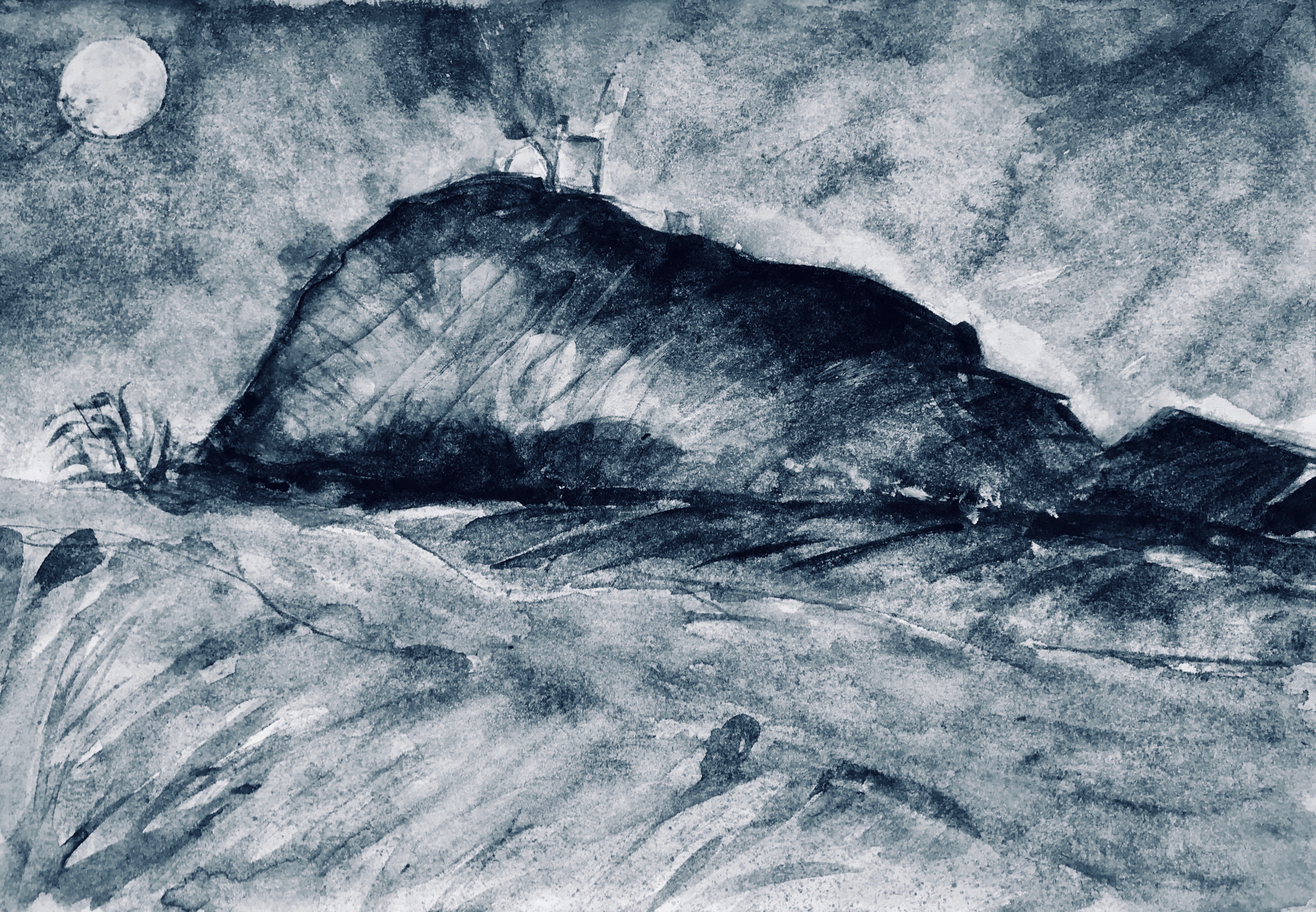
From the ruin of the old church, up on the bare hill, the church dedicated to St Nicholas, you’re hidden from the hospital where he died.  At twilight you could be floating, the land and the sea hardly drawn apart; to the west, the sea falling towards the horizon; the sodden land to the south barely out of the water. Northward, beyond the town’s humming lights you can see  the wooded hill over which we used to walk to the village where he was born.

Home: What The Magpie Knows

Sparti 1982 IMG_1820The Magpie brings us tidings
Of news both fair and foul . . .
And she knows when we’ll go to our graves,
And how we shall be born.

‘How did you choose your parents, Ste?’ He often called me that, Ste. He often just drawled out the vowel and left the ve unsounded. ‘Ha!’ He added a little harrumph for outfoxing me. But he rushed on. ‘I know how I chose mine; I made a mistake, I thought they were bohemians but they were Catholics.’ This time we both laughed, raised beakers of the same pink resiny stuff, made lurid in the poor fluorescent light of the basement.

‘You know Finn’ — he resisted the pun, for once — Finn the yoga teacher, he’s thin — ‘One of his Tibetan teachers told him that they know how to choose their parents. A lot of good it did them, some of them.’ Costello’s face was close to mine, opposite: square, handsome, just greying around the temples, lively eyes and a narrow mouth that seemed barely able to keep up with his intelligence.
We were in the place where we’d tried to steal one of the tables from outside. ‘They’ve got enough of them,’ he’d said as we made our way down the marble steps into the cigarette smoke and the thick, dense smell of warm olive oil. And the Greeks, in knots of twos and threes, dun-coloured like old woodcock, raising the familiar cacophony that had once sounded like quarrelling. Neither of us remarked that here there were only men. One of them looked on unblinkingly as Costello tugged up a bit of his shirt, pinched an inch of flesh away from his lean belly and injected.

‘Twice a day, Ste, twice a day.’ It was a kind of invocation.

***
I’d wanted to go alone, he knew that, but he’d had followed me out of the spiti, the flat we shared with the others on the edge of town. Lena was cooking that night; ‘She’ll only make a meal of it,’ he’d said. Mostly he talked about the day — the bloody oranges, Andreos our overseer, ‘How much d’you think he makes out of us?’ — but I sensed he really wanted to know where I headed when I wandered off by myself.  We went my usual way via the poste restante. There was a letter for me, from my mother. First time, it was always my father who wrote on behalf of the family. Nothing from Isabel.
Costello didn’t bother to check: ‘I wouldn’t want them to write to me,’ he said, ‘Unless there was money, a lot of it.’ He couldn’t raise the will to make it sound shocking. In the restaurant, the letter sat there, unopened; I knew what it must say, that my grandmother, my mother’s mother, had died.
He gossiped on about the Dutch girl; he hardly ever talked about her by name. He was proud that he spent much of our working day chatting to her while me and Hari, her boyfriend, were picking the oranges. ‘You and Hari, up the trees like monkeys!’ There was relish and irony in his sardonic voice, which could never quite cancel out his feeling of wonder at the absurdity of it all. He told me again what we all knew, that her parents were Sannyasins. They meditate in a group in her house. Open marriage.

‘I asked her if they always wear orange, she said it’s more like pink or purple. So, Ste, how did she get parents like that?’

***
‘Lena and Frank say they’re going home for Christmas, they want to be back in time to sign on. There’s a life! They’re like an old married couple anyway, off in their own little room.’ Then he added, ‘What about you?’ I was staying. I was glad, though I didn’t say so, that I didn’t have the money for the Magic Bus back. I ordered more retsina.
There was a surge of half-hearted jeering. We looked up at the tv screen suspended in a low corner, near a grimy pavement light; it showed England, seaside towns I seemed to know, battered by gale-blown seas, lashing rain and great snowdrifts. Even the cars were disabled. The Greek men looked agreeably at one another: hardened by life in Laconia they mocked any discomfort for far away, so-called great, Anglia.

‘Ha! I bet they’ll blame Maggie!’

As we were leaving a waiter came after me, imploring ‘Phile! Phile!’ Stupidly I’d left the letter behind. We’d taken another half carafe and Costello had talked on: about trying to outwit his diabetes and all the authorities back in England who connived in its attempt to quell him.

***
I have the letter in my hand now. I found it while going through my mother’s things after she died; she must have taken it from the small horde of stuff I kept in the box room I used when I stayed. There was no sign of the letter that had eventually come from Isabel (‘I love Huw but I want you too’). I doubt it would have passed my mother’s censor and she would have felt free to destroy it.

My mother’s letter, in a hand like that of a 16 year-old girl, lays out, unaffectedly, the death of her mother in a run down dock town on the Clyde. She recycles the words of the pastor who said ‘She was a good woman.’ I feel struck: there’s no doubt I chose these people, but how and why?

There is a rap at the door, ‘Are you alright in there?’ There’s pleading in my father’s voice, ‘Are you looking for something?’

***
Costello stumbled briefly on the steps as we left. ‘Damn! I’ve forgotten my torch.’ His nighttime blindness always startled me. On the pavement that night I couldn’t tell if he could see me at all. ‘You should see my piss in the morning, Ste; it’ll be solid.’
We stood alone on the broad pavement of the empty dark street; a few spindly street lamps doing their best to form shadows. Shut up shops stooped beneath the dull glare of the utilitarian flats above. No moon; a chilly December in Sparta.

I took one of his arms, tentatively, as though under instruction and  manoeuvred us into the direction of the spiti, home, then, closer, linking my arm through his. And, for a while at last, I felt the cool, stern compassion of five-fingered Mount Taygetus.


© Submitted to the Creative Future Writers’ Award 2019 run by New Writing South on the theme ‘Home’: it got nowhere. Ah well.

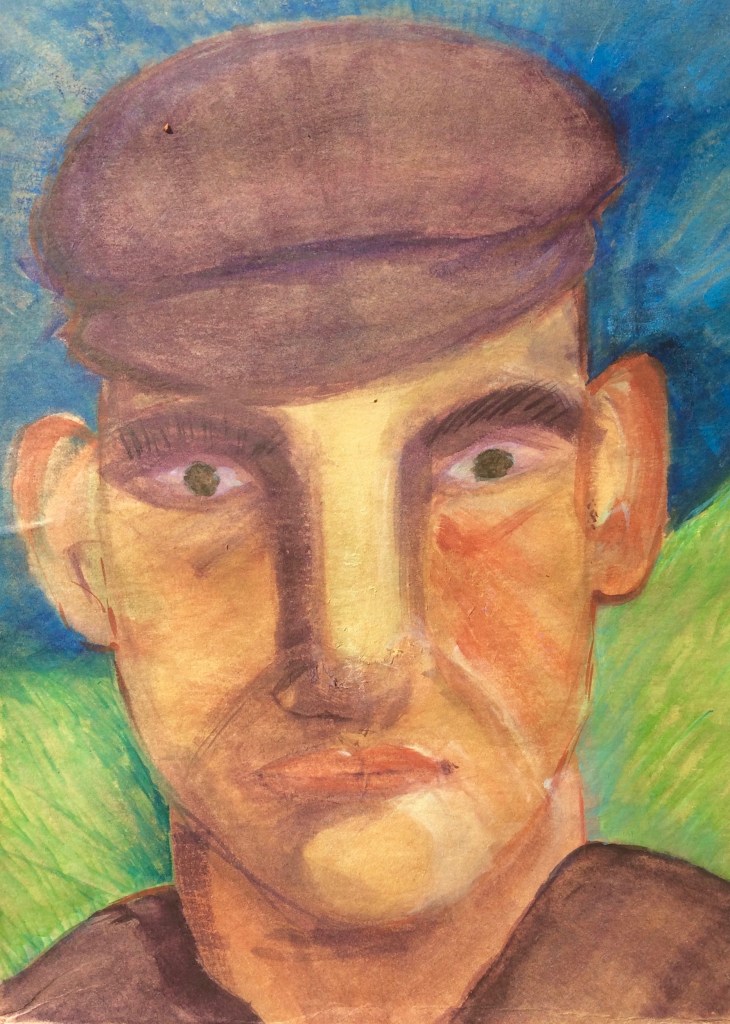
Fear

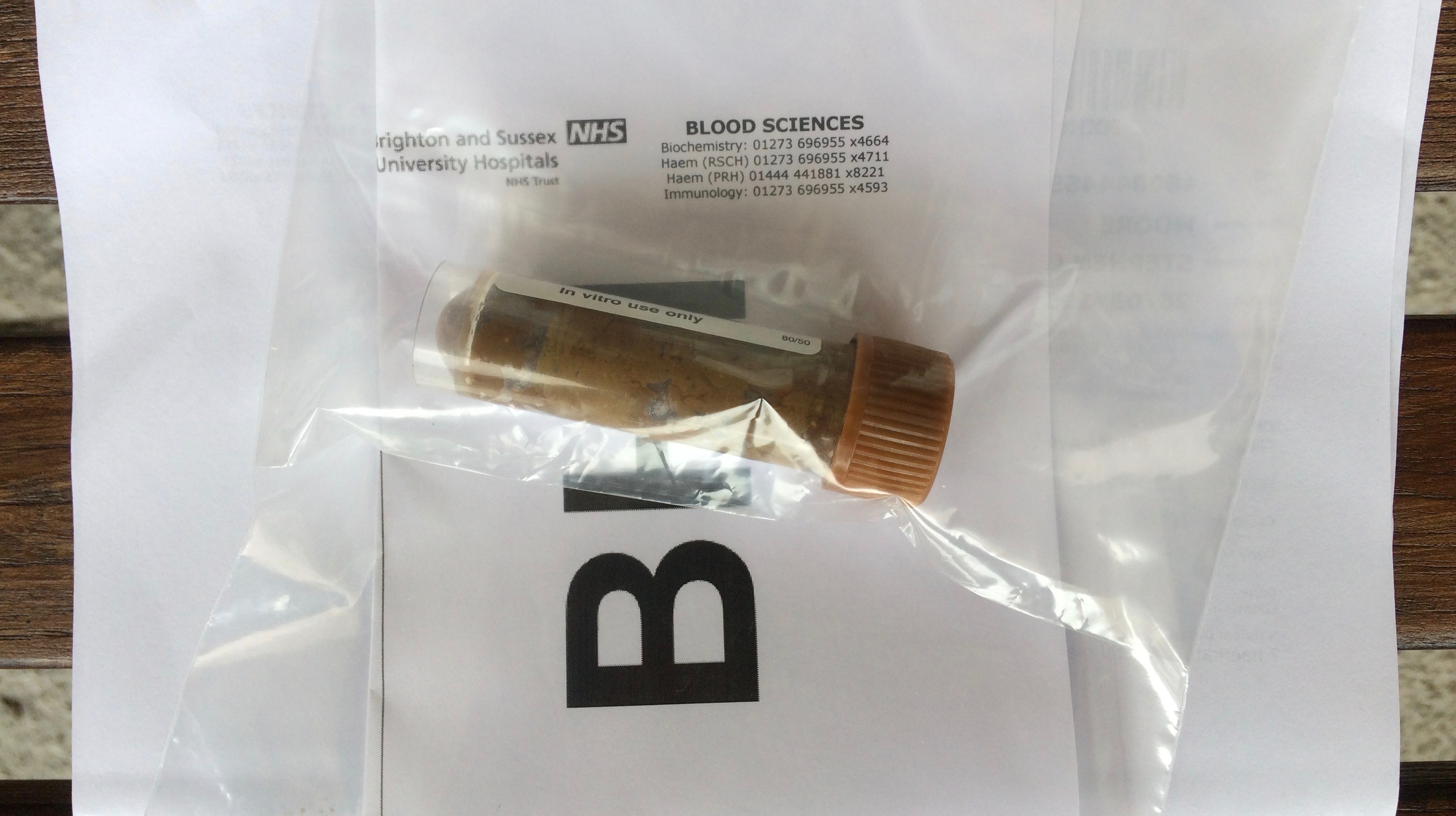
IMG_7530

So. You spend weeks, day by day
peering into the pan
scrying those wine red veins in the brown dung
you’ve excreted. Hoping
it doesn’t mean what you fear and wishing, day by day
it’ll stop. Until the day comes
(tooled with a thin spatula and a small diameter tube)
you hope this is not the day they vanish. So,
does this mean you fear madness more than malignancy?

Not The Devil’s Dyke

I said, ‘To be honest, I can’t do this anymore.’ Her question had been ‘How are you?’

‘I can’t do it, I’m sorry.’ I said, staring at the webcam, I couldn’t do business as usual, I couldn’t be my LinkedIn profile. ‘It’s not you,’ I added, hoping she’d understand.

‘Are you getting any support for your mental health?’ she asked, thoughtfully. I answered with a short history, then we said goodbye and good luck and I logged out of Skype.

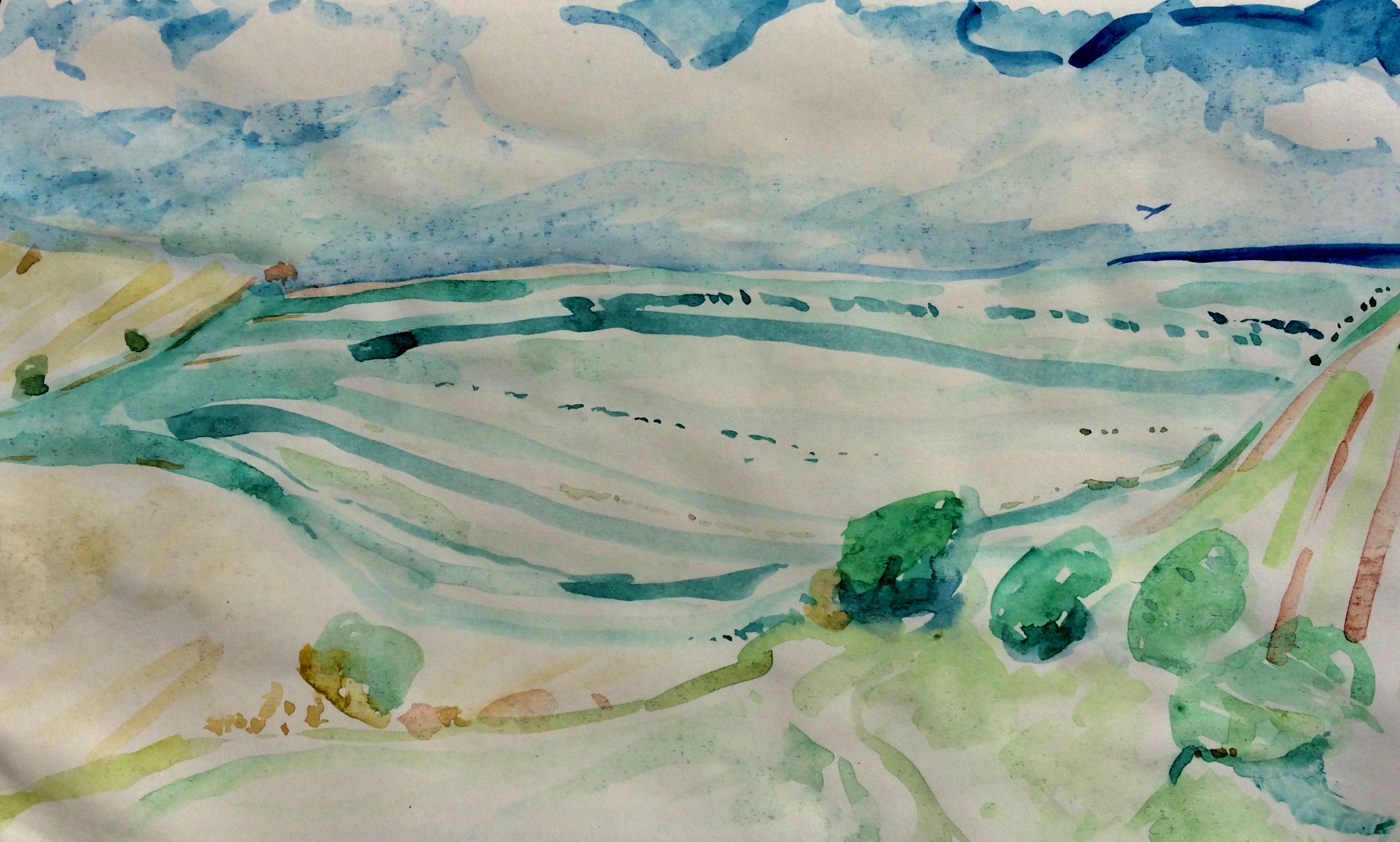
I headed for The Devil’s Dyke, on foot. I’d said I was going to take a long walk. I wanted to get away from myself. I couldn’t do it. Hove Park, then up and through overlooked, red-brick Hangleton where swifts were seeking a home. Access Land (‘Within the meaning’ — a board announces — ‘of the Countryside and Rights of Way Act 2000). This late in spring it’s wreathed in the cream of cow parsley and may blossom.

A foot bridge across the bypass, onto the old railway track, beloved of dogs and their walkers and lads on off-road trail bikes. Birdsong mingled with the traffic noise; a pair of whitethroat scooped from thorn bush to thorn bush, hidden again. At a bench I knew I could go no farther. I couldn’t do it. How could such scrawny legs be so heavy, a windless chest weigh so much?

On my way back a tiny viridescent lizard skimmed across the path, as dainty as a shadow.

IMG_5968

The Cat In The Window

the-cat-in-the-window-img_6018.jpeg

.   .   .

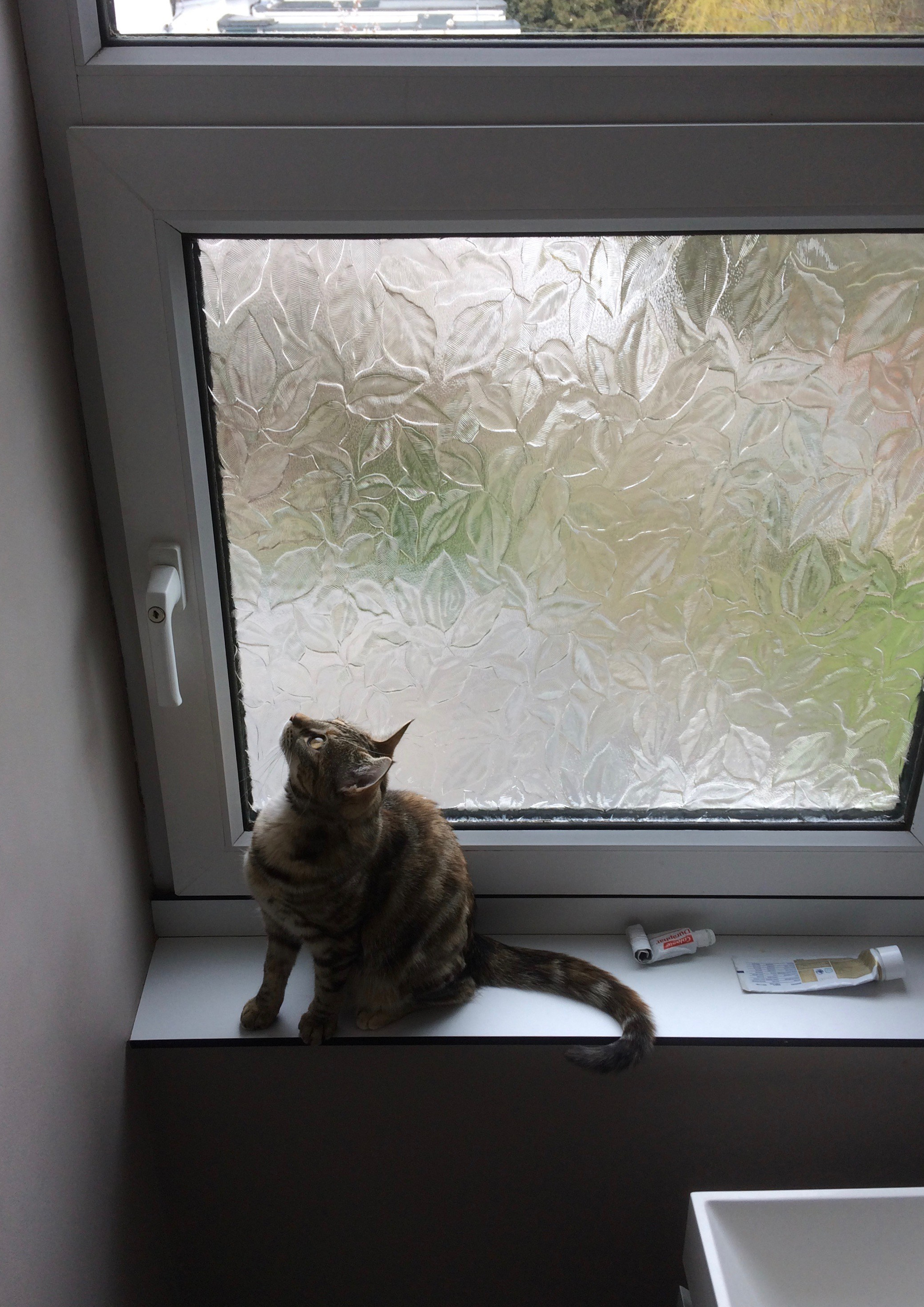
. . . here. i’m called hazel, a kitten and a cat.

home’s hove but i’m hollingdean born;
there were many sisters, many brothers, mother and aunt,
father was a wanderer, free and far:
i never saw that rover.
now here. father’s two footed and fond,
like sister, like mother so i’m liked and loved;
all come when i call (quite quickly sometimes).
from here to earth is two hurried leaps
scaring, skittering, the cost one limp leg;
so here, so now, stare through the window’s what i do.
yet here at dawn, at dusk, the man holds me close
opens the window, we watch, we hear;
i nose the air: one day, one day, when . . .

A Sunday In January

I opened the bedroom window to throw out some tat.

The tat is the stuff and dregs of my pockets: dried skin (heel and finger), screwed up Co-Op receipts, mini Post-Its; the waste bin in the bathroom seemed too far away. The Velux window is hinged from the top, quite smart but weighty so I can sneak out stuff without it being seen. Two floors down the garden would be a desert of slate gravel speared by two dried and sickly palms, but for the unopened celandine and stonecrop greening out of winter slough. It belongs to The Downstairs, who aren’t above reminding us tenants of their ownership. It’s Sunday in its January grey when the day hardly wakes.

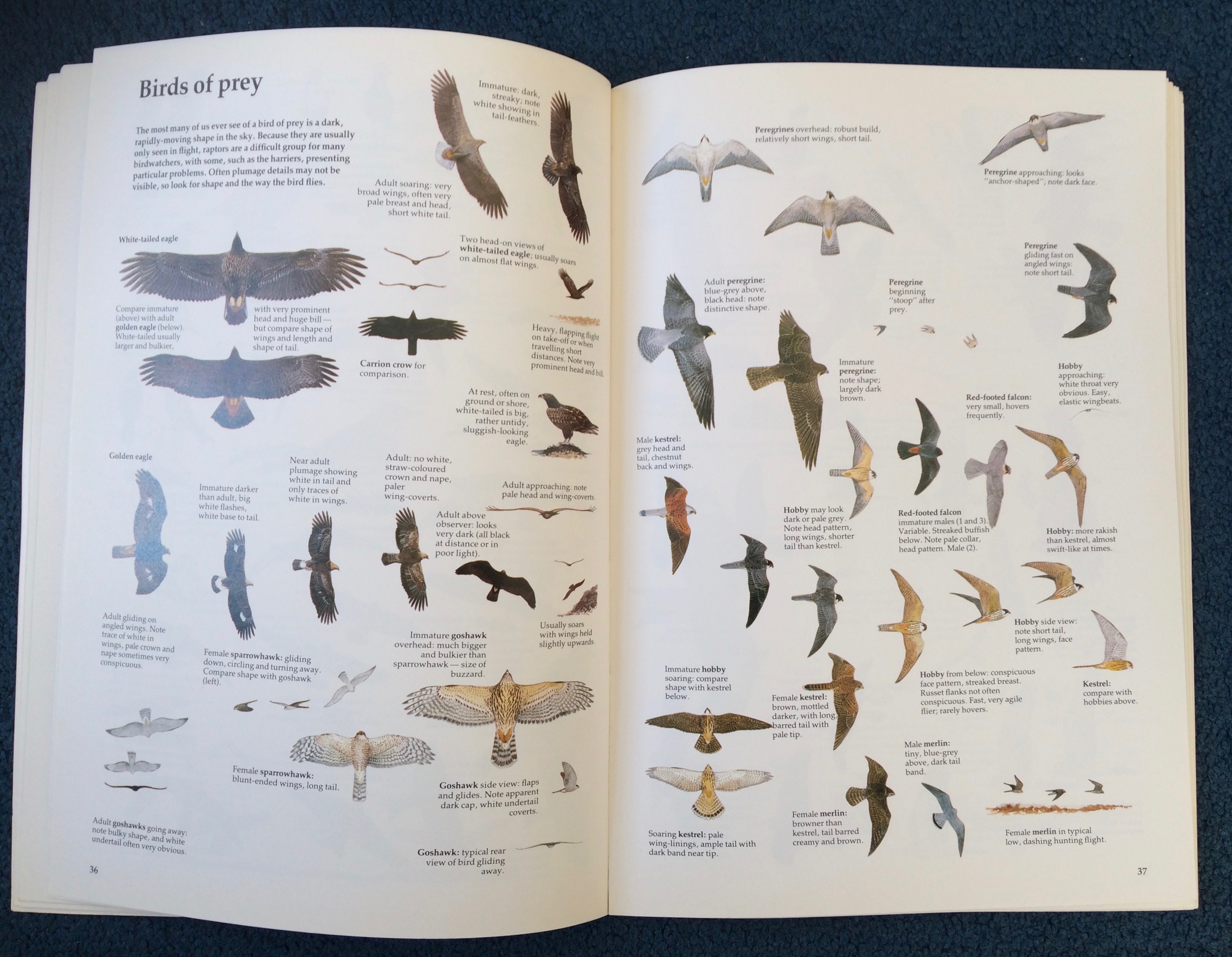
From left, a dark arrow, dark, quick, barely an armslength below, an absence of light, flint-arrowed wings, silvery trine low on its back. It must have been haunting under the eaves. It’s ushered away by a plump and purple pigeon, beyond the Victorian villa opposite. It? The Collins Bird Guide says, Do not hope for or pretend reliable identification of all birds of prey in the field — ever. And anyway, who ever sees a bird of prey from above?

I clomp into the living room and announce to wife and daughter, “I’ve just seen a peregrine and I’m going out to see it I can see it again.” Neither says anything.

I followed where I’d last seen it, around the old soap factory alongside the railway line, looking up when I could, assuming I was on a hopeless chase, but at least I was out of the house. Then there, after a hundred yards or so, it is: it’s blackness etched into the colourless sky, being mobbed by a gang of grey gulls, much bigger than — him (not it: too small for a her). And then, flap and glide, he was gone.

I went back home, completing a circuit, still finding tat in my pockets. They didn’t seem  surprised I’d seen him. A few days later the snow came.

Peregrine IMG_5611

photo from What’s That Bird? / Hayman, Everett / RSPB

Made by Humans: The Devil’s Rope

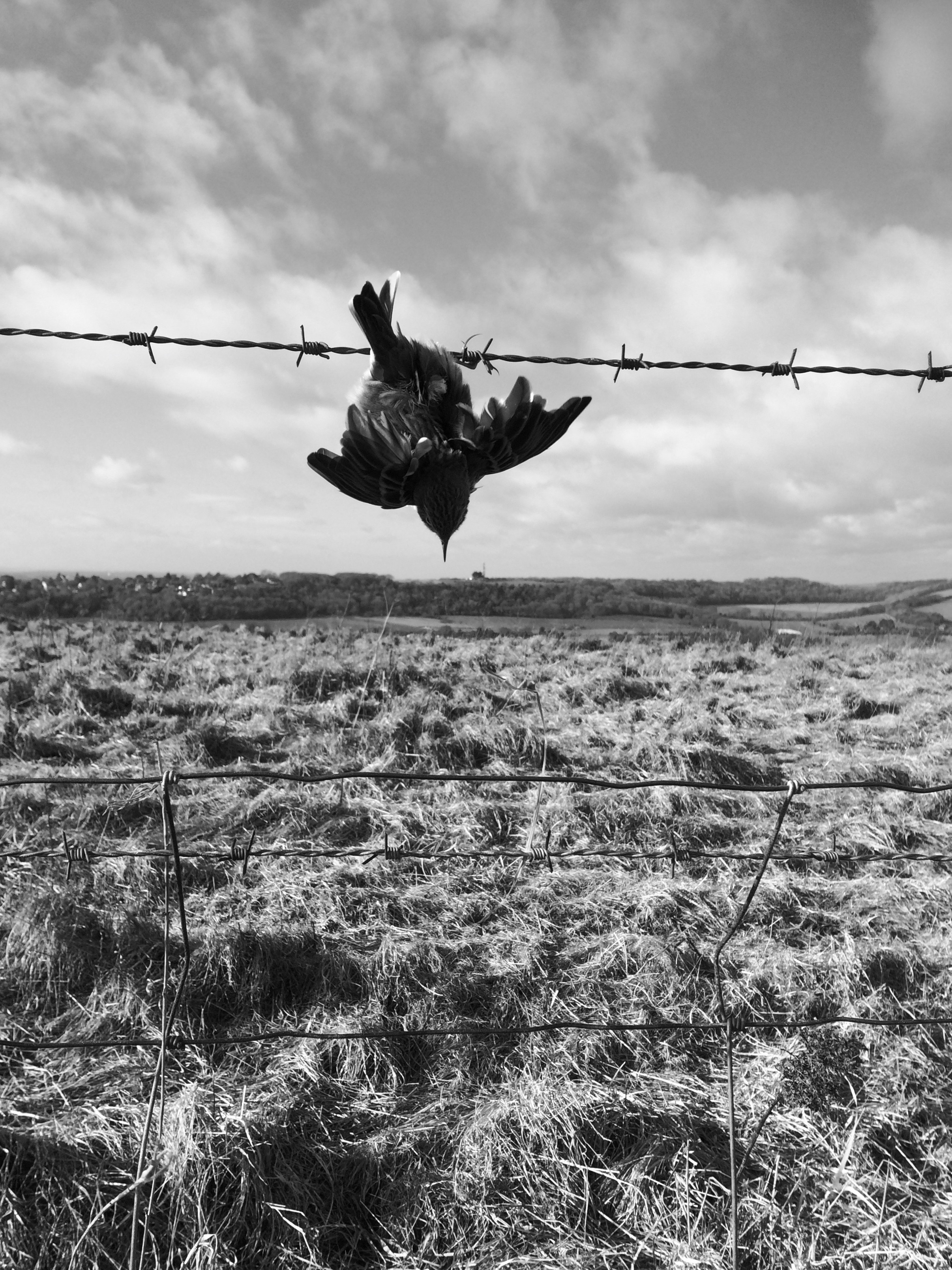
TreeCreeper nr Cissbury Rings IMG_5643

“Between two hills, two villages, two trees, two friends/The barbed wire runs which neither argues nor explains”. W.H. Auden.

On a walk to Cissbury Rings on the Downs.

At first I thought it was already dead (to my shame I filmed it, buffeted by the wind), spiked by the knotted barb. When I took it down I found it was still living, weak but warm and its heart still beating. Mad, it seems now, but I started to walk back to town holding it in cupped hands, as though, after a two hour walk I’d find a friendly animal rescue place . . . It died in my hand a short while later.

Even then — is this what death does to you? — when it momentarily started to flutter I thought it must have healed, wanted to be off, free, but, no, it was in its death throes. Something was free, but not the body. I walked up on to Cissbury, I didn’t want to leave it, I was still talking to it, as it got cold and stiff. I laid it down under a gorse copse, at the highest level of the hill. It had been tree creeper.

I didn’t take a photograph.


black-white-banner

African Blood

IMG_3059

‘Can I ask you a question? I was wondering about your ancestors; do you have any ancestors from the Mediterranean or The Middle East?’
‘Well . . .’
‘Ah, perhaps you’d like to be there now, in the Mediterranean?’ He was conspiratorial, trying to put me at ease, we both knew about the British weather.
‘I used to live there, the Mediterranean’, I said, not wanting to sound too eager to please.
‘North or South?’
‘Oh, I see.’

The Haemotologist was tall, slim, slightly stooped, as if from deference, rather than age, although he seemed near to sixty, with receding, crinkly hair and a trimmed, greying beard. Handsome face and eyes that looked like he enjoyed being intelligent and dapper and charming. Complexion of coffee colour; you’d say North African, with the clipped accent of the well-educated. He ran through the analysis of my blood at speed, noting where it was less than optimum. Quickly moving on to the next graph or table, always finding ways to reassure. My blood, with it’s laggardly white blood cells, who nonetheless, according to him, managed to get the job done, was universal amongst Africans, he said, wherever they are.

I could hardly keep up with the statistics he generously showed me on the computer screen as they scrolled by. Was it me, or did other patients understand these kind of things, well-versed by the medical pages of the Daily Mirror or Google? I dismissed the thought that all this  — he shared his gorgeously hand-written notes, too — was for the benefit of the young female medical student who sat demurely behind my left shoulder. Kidney, liver, bone marrow and creatures known as the scavengers were his only concessions to my vernacular ignorance. How did he learn all this?

But mostly I was thinking about the journey. Exiled from the Dardanelles, when we got away from the Greeks, us no better than Helots. From Italy to Libya, when the Mediterranean was one, undivided. There we must have stopped off for a while, took on provisions, tarried, we might have called it; the Balearics, leaving behind our cairns; then Morocco, last pleasures and civilisation before the grim Atlantic, with its mist and black rocks and fierce gales, then to the edge of the world, Totnes, our New Troy, so called. Brutus would have left me there; he had bigger fish to fry. And my ancestors? After that we moved only when we had to.

‘So you’re saying that if I were African, my blood would be normal?’
‘Yes, that’s right.’ He was gently ushering me out of his office.
‘Thank you’, was all I could think to add.
‘Don’t worry,’ he said, as I shook his hand. And I went off for another blood test.

Expert