Shut Out The Sun

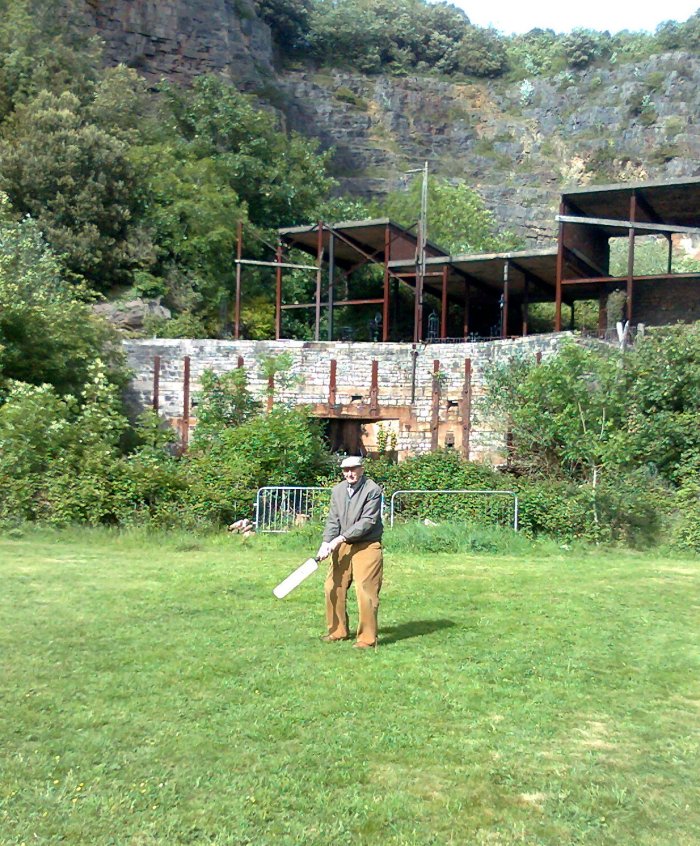
Cricket at the quarry

It was my dad who first took me to the cricket. A festival game in Weston-super-Mare, 1964. Dad holiday smart in his double-breasted blazer and open-neck shirt. Somerset those days were the team of Langford, Alley and Fred Rumsey. I left Somerset long before they ever won anything, long before the era of Richards and Botham (“Jus’ an o’d yokel” Dad called him). And after that time I don’t think we went together again or talked much about it, or played, other than on the beach (or quarry). Like other things, birding, say, he took me to the threshold and left me there.

The last Sunday in June, 2019 and a call from my brother told me Dad had had a fall. With my wife and daughter I took the train across the south of England. Shoreham by Sea, Lancing, Worthing, Angmering, Chichester: an incantation along the crowded south coast; inland, Salisbury, where, at other times, I’d jump off to see the cathedral, Warminster and its uncanny hill, Bradford on Avon and thoughts of its Saxon church, and onward. At Weston General Hospital he seemed as he had 18 months before following another fall: bones protruding, dun skin bruised and blotched, stony, but still vital. He died later that night.

Then the cricket came back. Here in Hove a few days watching Sussex at the County Ground; Test highlights on iPlayer in the evening and Day Passes to Sky TV: work was patchy and I needed to shut out the sun.

Sunday 25th August. I took the train to Lewes, then walked out of the town, onto the Downs at Southerham, up to Mount Caburn, then down into Glynde. Walking: something else my dad had left me. I knew there was a game on that day: the local club, Glynde & Beddingham were playing an MCC XI. The tenth anniversary of their winning the National Village Cup; I’d read a long article about it while working in Istanbul, fearing I was reading about the death of an England I hardly knew.

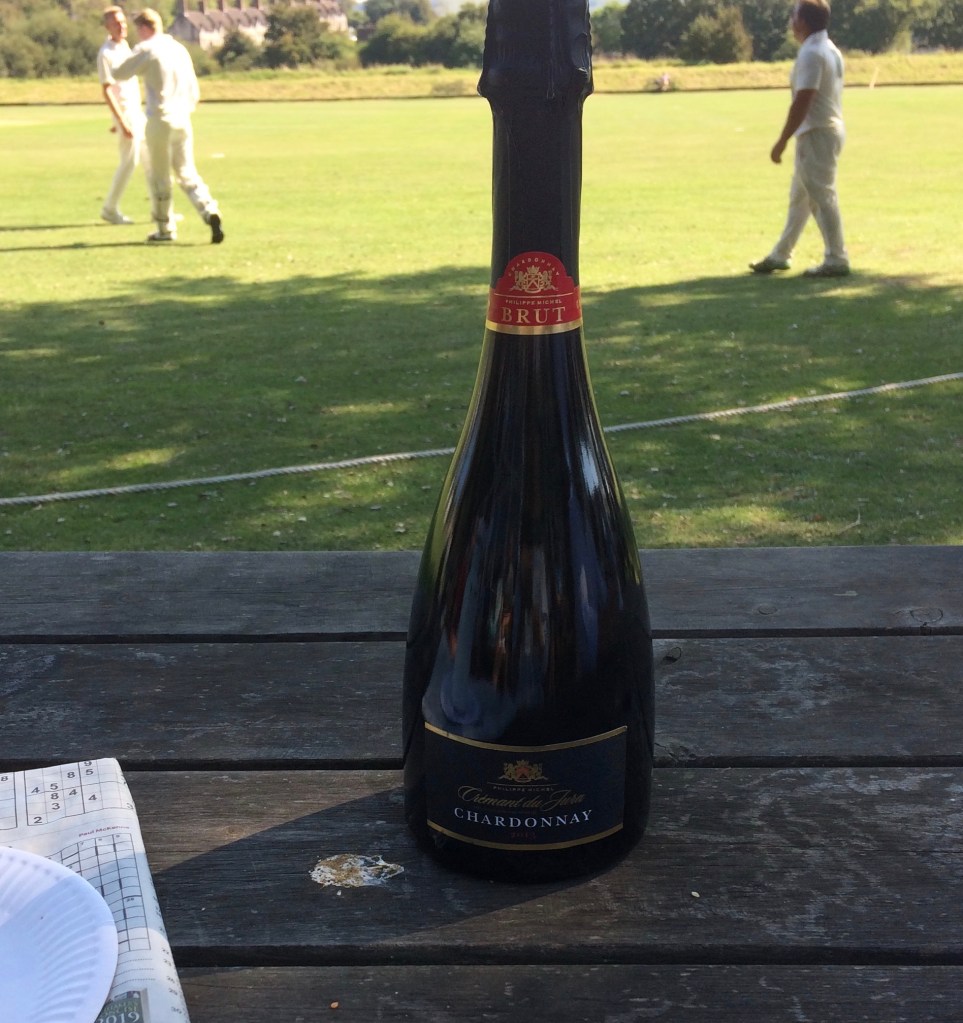
Outsider. Incomer. I did what I’ve always done: tried to fit in without standing out. Drank the local beer, sat just off from the clubhouse, chatted when I could with the members. I won a bottle of fizzy Chardonnay, the one that comes in a seductive bottle. Not quite won. I was first in line for the raffle but the Aussie in charge hadn’t worked out how to do it, so I went back to my seat empty handed. When I came back again all the tickets had been sold. Apologetically the Aussie handed me the only thing left, the wine.

By now his English mates were huddled over their iPhones in the lee of the clubhouse. Joffra Archer had joined Ben Stokes. He couldn’t could he, steal it for us in Sussex? That reverie didn’t last. Then came Jack Leach of Somerset, the last man. I stopped chipping in with the banter. I could see my dad’s dark lonely bungalow, smell its must and aged damp in the Weston-super-Mare he’d never left. “C’mon, c’mon” he was saying to the radio, stooped, clothes stained, unkempt, more impatient to get his tea on time than for any win. Opening tinned spaghetti, bundling it into the microwave, slamming the door shut “Fiddle-arsing about”, he’d call it.

Then a roar from the lads round the phones and I was back in the Sussex sunshine.
One for later

The was entered for the Wisden Cricketers’ Almanack writing competition for 2021. The Co-Editor in his acknowledgement warned me that “Probably because of the coronavirus pandemic, we have received significantly more submissions than ever before.” And added he would be in touch with the winner before the end of January 2021. As I never heard from him again I can assume I’m one of the also-rans. Well, it’s the taking part that counts.

This month my father would have been 94.
A Day In Southern England

The day started with me sitting on the lid of the cat’s litter tray after I’d taken it off to clean the base out. It cracked down the middle with a splintering noise. I don’t know why I did it, maybe it just seemed like the kind of thing that wouldn’t happen, defying the logic of my weight, the angle of meeting and the flimsiness of the plastic.

Outside the pet shop, with my new litter tray, in the huge carpark that had once been the home of Brighton and Hove Albion, I got a call from my youngest brother saying that Dad had had a fall the day before. The hospital had put in place end-of-life-procedure. I’d had to call him back, the connection was bad or it might just have been my clumsiness.

One thing after another. It was a warm and sunny day, the last day of June. Now I’d have to take the train across the country. That train ride was something I looked forward to, usually, but on a Sunday, in England?

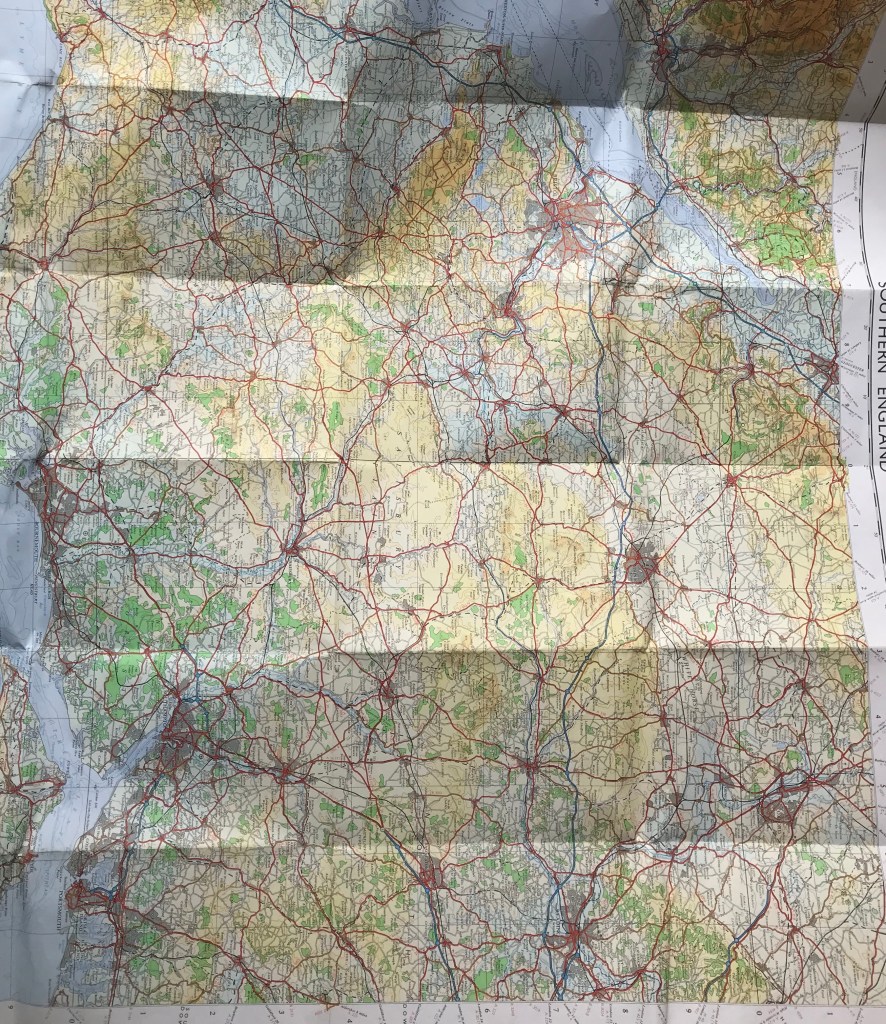
I told my wife. She started to make preparations to come too, with our daughter. Another thing. Usually I go by myself. Look out the window, read, take a beer. But in truth it was rather lovely. The three of us, a kind of rural ride by train across the south of England on a green and sunny Sunday afternoon. Shoreham by Sea, Lancing, Worthing, Angmering, Chichester, an incantation along the crowded south coast; inland, Salisbury, where I’d jumped off a few weeks before on my last home visit, to see the cathedral, Warminster and its uncanny hill, Dilton Marsh, Bradford on Avon and memories of its Saxon church, Bath. England were playing India away off in Birmingham. The girls mocked me as I checked the score, so far so good, on the mustard coloured BBC app.

We were met at the station by my brother. When we got to the hospital Dad seemed as he had 18 months earlier after another fall: stony but visceral: bones, veins, paper skin with bruises and blotches. He roused himself and straightaway recognised my wife and daughter, ‘Ah! It’s you!’ He hadn’t seen them for two years. Then me: ‘Which one are you?’ I was the last to leave, ushered away by one of the nurses; I hadn’t thought of much to say.

At my brother’s we watched the cricket highlights together, sharing a beer. My daughter explored the garden. It’s got four or five ponds and she went off looking for frogs. We watched the coverage of Glastonbury (which flags, we wondered, might be unacceptable to wave there). I was deeply asleep and had no idea where I was or the time or what was happening when my brother came into my room. He’d got a call from the hospital. It was just after midnight and the two of us walked there through a sleeping village in Somerset.

The hospital appeared like an eerily lit alien presence, we were let in via a video intercom and were led by a nurse into a visitors’ room and offered tea. You’ve got to have tea, I thought, though I didn’t fancy one. There’d been a moment’s hesitation when we’d got to the ward as one nurse whispered to the duty nurse; in the dim light I could see a screen up round my dad’s bed. A little later a doctor came to see us: a young woman, blue uniformed, blonde, calm and good-looking to tell us he had passed away ten minutes before. She asked if there was anything we wanted to know and scanned our faces for any emotion. There was nothing to ask. We thanked her.

A while later another nurse came to see us, sombre but bouncy, somehow. The three of them had held his hand and stroked his hair, she said. We saw the body, still on the bed, in the ward, with the bleeping of monitoring machines and another patient’s rasping breathing going on. ‘I always talk to them’ the nurse said, ‘listening is the last thing to go.’

My dad died on 1st July, 2019, a little after midnight.