
Don’t start in the carpark (again).
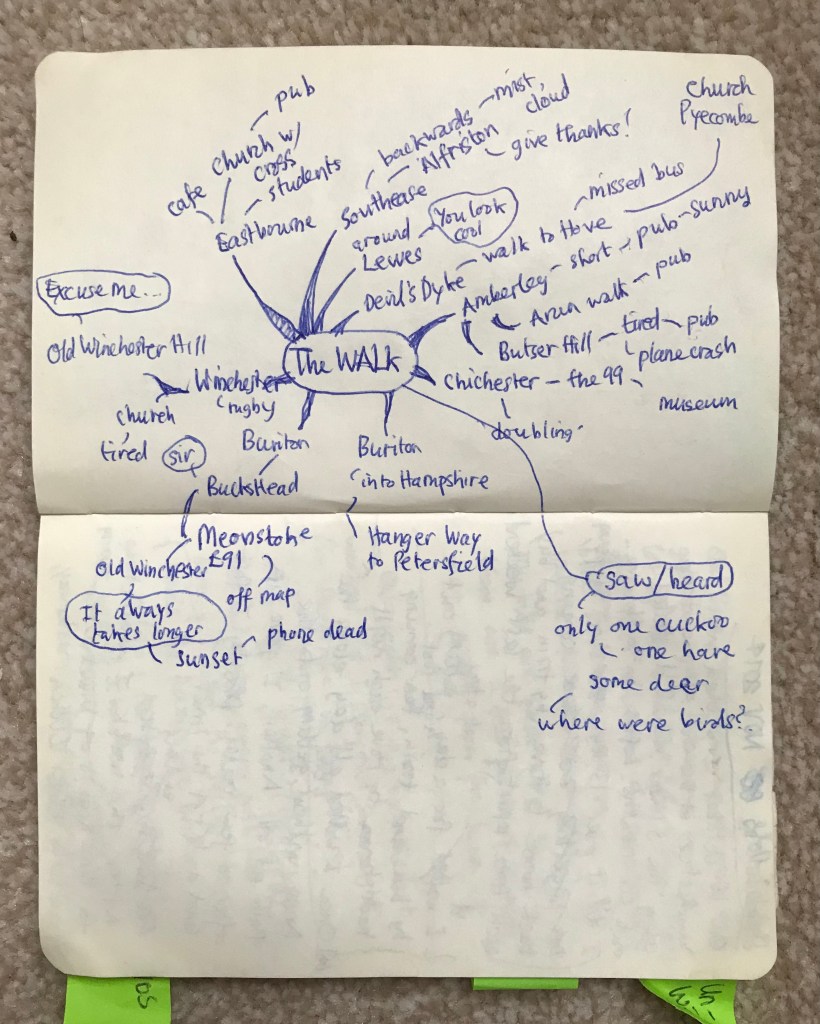
On 10 October 2015 in the late afternoon, I tramped along the footbridge over the A272 and into Winchester at the end of my walk along the South Downs Way. A walk that I’d done over six months and in thirteen stages. I’d walk for up to a day at a time, setting off and getting back home on foot or by bus or train; only on the last two days did I stay away overnight. I felt tired most of the time.
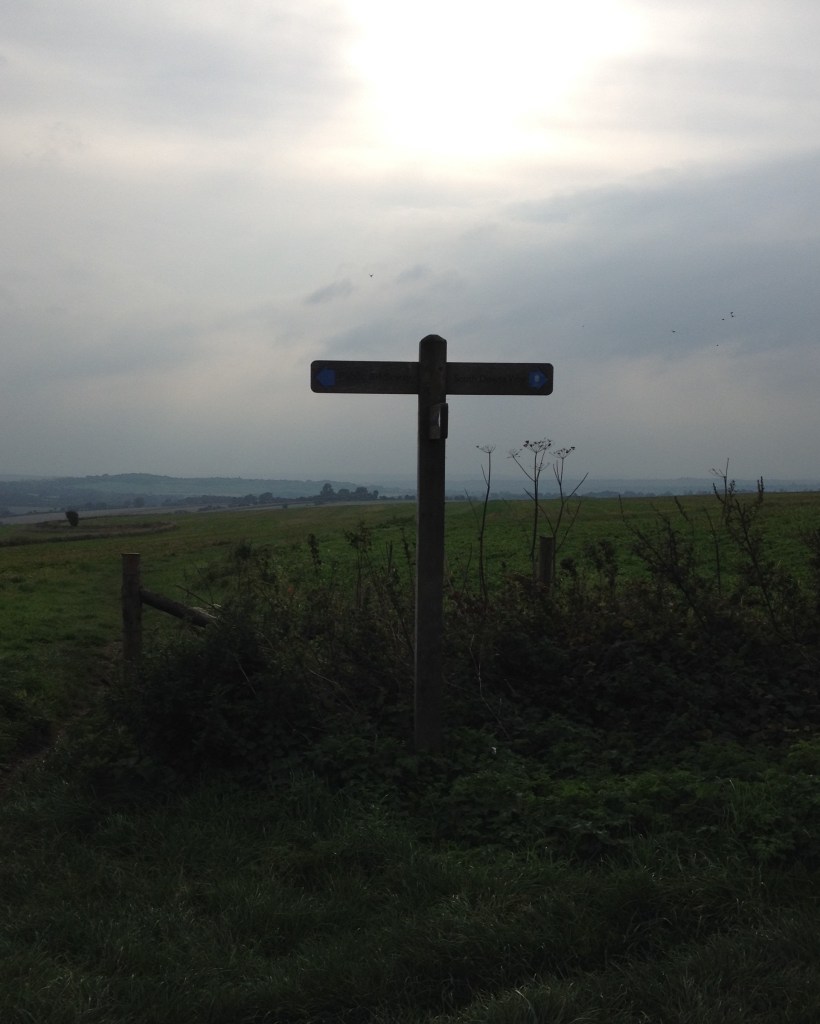
Life Is Good: I cross Meon Springs to Whitepool Farm. There’s a pond; it gulls you at first, then I see it’s set and ready for fishing. Fat trout, most likely. It’s good business round here; fat fees, too. I keep on walking; good, no-one bothers me.
I check the map, then up, keeping the copse to the right, it’s steeper now. Behind is Salt Hill, Butser Hill and, further off, the brief blessing at St Mary’s Buriton with its crossed bones and sarcophagus. No cyclists, no riders, no-one; the dusk or my own will is warding them off.
Then through a gate and onto the road. A car, a Volvo passes. Ahead, south west, the sun is dipping. And against the silver sky, the first sight of the Hill. Old Winchester Hill. Worked earth, grown soft into the land, as still and impassive as a god, taking worship. (But here’s a thing: battery’s dead, memory’s full).
Along the road and I see that the Volvo has stopped, about sixty yards off, and the man’s got out. Around 40, I guess, professional. Hair trim, he’s in smart slacks, a polo shirt with a tiny logo. There’s just me and him on the ridge road. The still sea of my mood changes. He turns to look at The Hill, takes out his phone, — his is charged — and, like a tourist with a relic, captures its likeness. Then strolls slowly on, content, nearing.
As we cross, I say something; I didn’t mean to, it’s from some hidden self I didn’t know, more confession than greeting: ‘Hi’ or ‘Evening.’
The man hears, absolves, smiles slightly: ‘It always takes me longer when I come this way.’
I walk on, calm now, towards the goal, yet feeling a sting like shame.
The next morning, the last morning, at the foot of Old Winchester hill, I see a gaggle of youngsters following me up the path. I hurried on. I didn’t want company. But even as I stumbled on I heard running and one of the lads calling after me, ‘Scuse me, scuse me!’ He was holding on to a map. ‘Scuse me, sir, do I know where we are?’
Back home, for three nights running I dream of Winchester and its stream, the Itchen.
© This is a rewrite of an earlier blog submitted to the Creative Future Writers’ Award 2016 run by New Writing South; it was long-listed.
 sussex_english_training